---
title: Why Discovery is Essential | Diagram
description: A guide to building a blueprint to help make your website design project a success.
image: https://www.wearediagram.com/hs-fs/file-2464108238-jpg/blog-files/monkey-3.jpg
---
down-arrow application-development hosting integrations halfdiamond diagramMask break-up-bottom break-up-top icon-challenge icon-solution icon-arrow-decrease icon-arrow-increase icon-arrow-left icon-arrow-right icon-arrow-left-narrow icon-arrow-right-narrow icon-change-decrease icon-change-increase icon-diagram-star diagram-star-extended diagram-process icon-facebook icon-linkedin icon-twitter icon-website icon-instagram
[Diagram Company logo glyph ](https://www.wearediagram.com/)
What are you looking for?
Search Search Icon
Popular Topics
- [Strategy](https://www.wearediagram.com/blog/tag/digital-strategy#anchor)
- [CMS](https://www.wearediagram.com/blog/tag/cms-strategy#anchor)
- [Umbraco](https://www.wearediagram.com/blog/tag/umbraco#anchor)
- [Episerver](https://www.wearediagram.com/blog/tag/episerver#anchor)
**Published**
February 4, 2013
**Author**
[ Dennis Kardys ](https://www.wearediagram.com/about-us/profile/dennis-kardys)
**Reading time**
6 minutes
**Topics**
- [Design](https://www.wearediagram.com/blog?tag=user-experience)
Share
[mailto:?subject=Take%20a%20look%20at%20this%20page&body=Hey,%20I%20found%20this%20and%20thought%20you’d%20like%20it:%0D%0Ahttps%3A%2F%2Fwww.wearediagram.com%2Fblog%2Fwhy-discovery-is-essential](mailto:?subject=Take%20a%20look%20at%20this%20page&body=Hey,%20I%20found%20this%20and%20thought%20you’d%20like%20it:%0D%0Ahttps%3A%2F%2Fwww.wearediagram.com%2Fblog%2Fwhy-discovery-is-essential)
You know your business inside and out. You know your audience. You’ve even studied what everyone else in the industry is doing.
After considerable time, effort, and planning, you pull together a
request for proposal (RFP). You’ve listed specific objectives and
requirements, along with an extensive list of features that seem to work
well on other popular sites. You’re now ready to select a vendor and
build a website.
### Blueprints Aren’t in the Budget
There’s just one problem: an RFP is no substitute for a detailed
blueprint. RFPs simply don’t contain the depth of information that web
teams need to have if they’re going to build something capable of
accomplishing business goals. It’s like expecting a team of skilled
contractors and craftsmen to build a commercial property by working off a
napkin sketch. Even if the construction of each feature is built
exactly to specification, there is little guarantee that what you end up
with will actually be useful or desirable. So why are so many
organizations eager to jump right in and start building, without feeling
the need to invest in comprehensive planning? I can think of a few [misconceptions to blame](https://www.wearediagram.com/blog/common-misconceptions).
Whatever the reason may be, there’s one thing you can be sure of: If
you want it done right, you need to invest in a detailed plan.
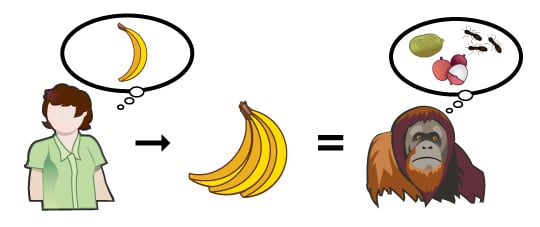
What
kind of monkey wouldn’t go ape over bananas? Orangutans (which are not
monkeys) prefer to eat things like lychee nuts, durian fruit, tree bark
and insects.
### Don’t Look for Vendors
Many companies will volunteer to build your website without
conducting a formal research or discovery phase. There may be times when
this might make a lot of sense, although honestly I can’t imagine when.
Without any research, the vendor you hire will be unequipped to make
the many decisions necessary to build a successful product. Decisions
will either be based on broad assumptions or as the result of constant
calls for clarification. This places the burden of decision-making on
the client and away from the designer. Consider this common client -
vendor exchange:
> Vendor calls client: *“How exactly did you intend this to work?”*
> Client responds: *“I don’t know...you’re the designer.”*
This inevitably leads to circumstances where “best-guess” decisions are made with little to no accountability for the outcome.
We used to do things this way. Programmers would read through the
requirements and build the application to work to the best of their
understanding. Project managers from both sides would exchange
interpretations the statement of work, making decisions about how the
site should look and function. The design team would come in next and
polish up the interface.
It was an effective way to get the job done, and we were able to meet
all of the project requirements. Projects were profitable, completed on
time and within budget. And yet, we would look back at the completed
project and think, “what did we build? Will anyone actually use this?”
And worse, the sites just didn’t deliver the type of results that the
client had hoped for. It was clear that if we wanted to build the best
websites possible for the people hiring us, we’d need to do more than
just go down a list checking off project requirements. Real project
success requires both the client and the design team to admit that
neither one of them can do it alone.
### Find a Strategic Partner
What’s really needed is true collaboration — and not just between
project managers and stakeholders. You need the best minds on both sides
to come together with the shared goal of strategizing the end product.
Metrics need to be established, and you need a plan to measure your
site’s performance over time. People need to get their hands dirty and
step away from the computer and boardroom meetings. Somebody has to take
time to observe and analyze how people are using your site and to
identify what obstacles they face.
When you hire a vendor, you hand them a list of what you want done
and you tell them how to do it. That’s why we don’t opt to be a vendor.
We’d rather focus on long-term partnerships. A strategic partner will
spend the time to understand your business and your audiences so that
even beyond the initial project you have someone you can rely on. We see
how quickly technology evolves, and how constant connectivity affects
that way people connect with each other, find information and make
purchasing decisions. Good partners have a team of designers,
strategists, programmers and user experience practitioners on staff all
dedicated to working with you to bring your project to life.
### Process and Methods
A discovery phase should not be considered some obligatory hurdle
that must be crossed in order to establish project cost or begin work.
The purpose of a discovery phase it to manage time, energy and budget
wisely. We don’t have one fixed cost for conducting research and
discovery because we don’t advocate process. A process implies that
there is a predetermined sequence of steps that will result in a
specific outcome. But it’s not an à la carte menu either. Not every
project benefits from the same forms or depth of research. A better
option is to examine the needs of the projects and only select the most
appropriate methods from a vast toolbox of techniques.
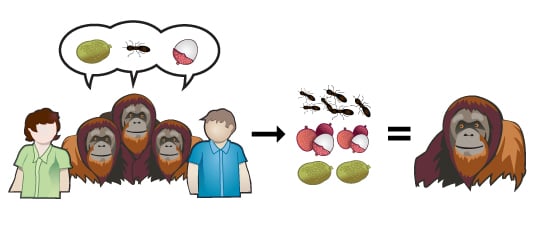
Observing
subjects in their own environment is a good way to uncover information
about the things that are important to them. And no, I am certainly not
insinuating that website users are apes!
### Budgeting for Discovery
You can always return to the project later and add-on features. It’s
not quite so easy to go back and re-architect the foundational elements
of the site. So how do you determine how much money and time to
allocate toward discovery? Although we can speculate about your budget
and make assumptions about how much resources should be allocated, it’s
not the best way. The real answer is: it depends.
With most of our partners we begin by establishing how much the
overall project budget is. Once we have an idea of how much budget has
been allocated to the project, we can devise a plan for dividing the
resources between the discovery, design, programming and testing. The
reality is that this sometimes means that desirable features get bumped
and don’t make it into the initial release. But in exchange, you end up
with a focused plan and a flexible system designed to accommodate new
features. A system that anticipates growth and can adapt to the changing
needs of your organization.
### Move Forward
That’s the real goal of discovery: to create a system that will help
you move forward and keep pace with evolving technology and the changing
demands of your users. For many organizations, their website is a
bridge that connects their brand and services to a much larger audience.
We want to work with you to build that bridge.
**Let’s Team Up!**
## Results Matter.
We design creative digital solutions that grow your business, strengthen your brand, and engage your audience. Are you looking for a partner to get you to the next level?
[](https://cta-redirect.hubspot.com/cta/redirect/213744/bdae329f-3319-4846-94e1-cc74813732c3)
```json
{
"@context" : "https://schema.org",
"@id" : "https://www.wearediagram.com/#website",
"@type" : "WebSite",
"name" : "Diagram",
"potentialAction" : {
"@type" : "SearchAction",
"query-input" : "required name=search_term_string",
"target" : "https://www.wearediagram.com/search?q={search_term_string}"
},
"publisher" : {
"@id" : "https://www.wearediagram.com/#org"
},
"url" : "https://www.wearediagram.com/"
}
```
```json
{
"@context" : "https://schema.org",
"@id" : "https://www.wearediagram.com/#org",
"@type" : "Organization",
"logo" : {
"@type" : "ImageObject",
"height" : 60,
"url" : "https://www.wearediagram.com/hubfs/diagram-logo.png",
"width" : 600
},
"name" : "Diagram",
"url" : "https://www.wearediagram.com/"
}
```
```json
{
"@context" : "https://schema.org",
"@id" : "https://www.wearediagram.com/blog/why-discovery-is-essential#breadcrumbs",
"@type" : "BreadcrumbList",
"itemListElement" : [ {
"@type" : "ListItem",
"item" : {
"@id" : "https://www.wearediagram.com/resources/",
"name" : "Blog"
},
"position" : 1
}, {
"@type" : "ListItem",
"item" : {
"@id" : "https://www.wearediagram.com/blog/why-discovery-is-essential",
"name" : "Why Discovery is Essential"
},
"position" : 2
} ]
}
```
```json
{
"@context" : "https://schema.org",
"@id" : "https://www.wearediagram.com/blog/why-discovery-is-essential#post",
"@type" : "BlogPosting",
"articleSection" : [ "Design" ],
"author" : {
"@type" : "Person",
"name" : "Dennis Kardys"
},
"dateModified" : "2025-12-11",
"datePublished" : "2013-02-04",
"description" : "A guide to building a blueprint to help make your website design project a success.",
"headline" : "Why Discovery is Essential",
"image" : [ "http://cdn2.hubspot.net/hub/213744/file-2464108238-jpg/blog-files/monkey-3.jpg" ],
"inLanguage" : "en",
"keywords" : [ "Design" ],
"mainEntityOfPage" : {
"@id" : "https://www.wearediagram.com/blog/why-discovery-is-essential",
"@type" : "WebPage"
},
"publisher" : {
"@id" : "https://www.wearediagram.com/#org"
},
"url" : "https://www.wearediagram.com/blog/why-discovery-is-essential"
}
```